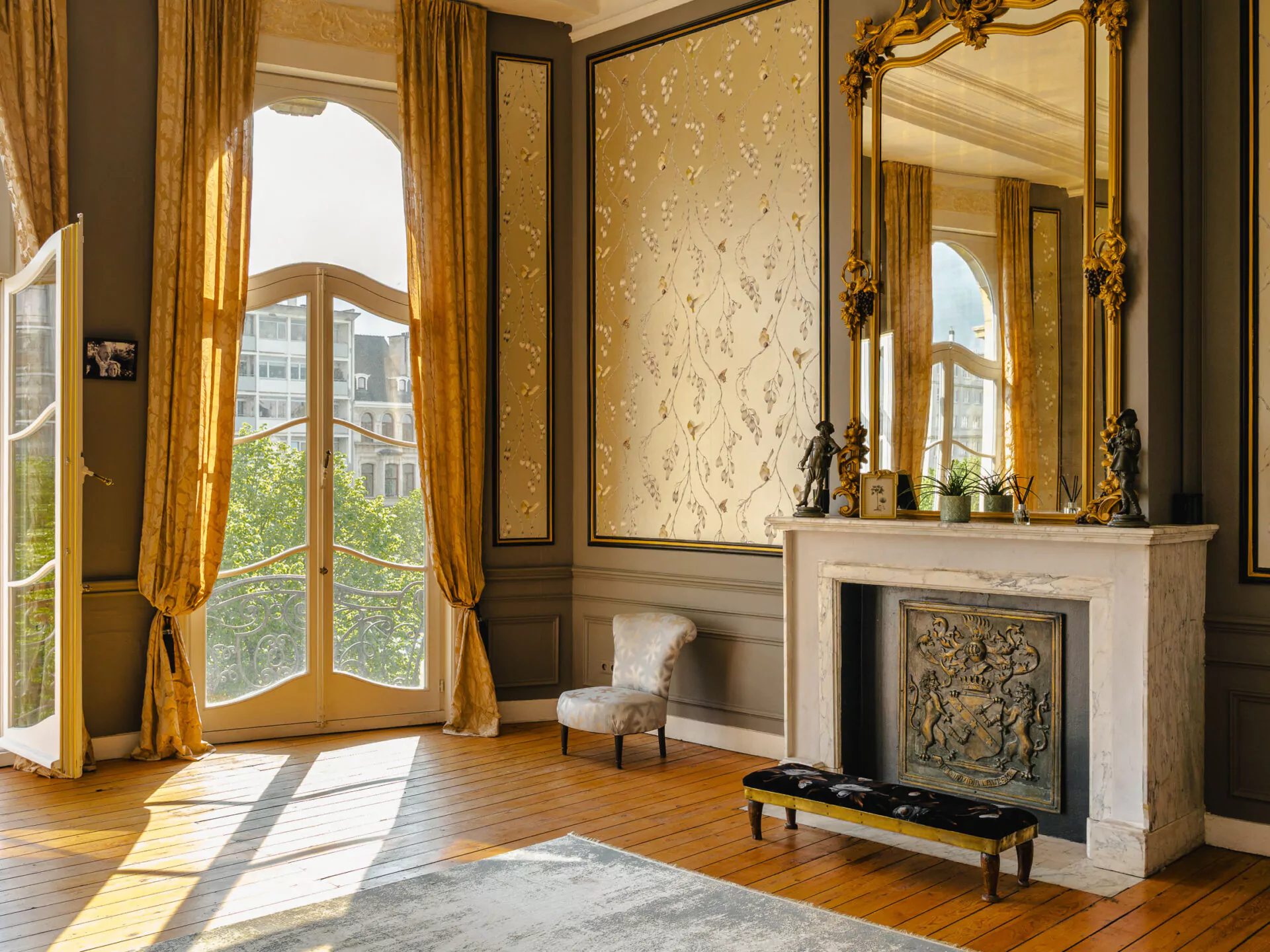
In Belgium, the townhouse holds a special place. Built in the late 19th or early 20th century for the urban bourgeoisie, it was designed to last, to entertain and to impress. More than a century later, it has lost none of its appeal. Here are six reasons behind this enduring fascination, illustrated by properties currently offered by Sotheby's International Realty Belgium.
Volumes that tell a story
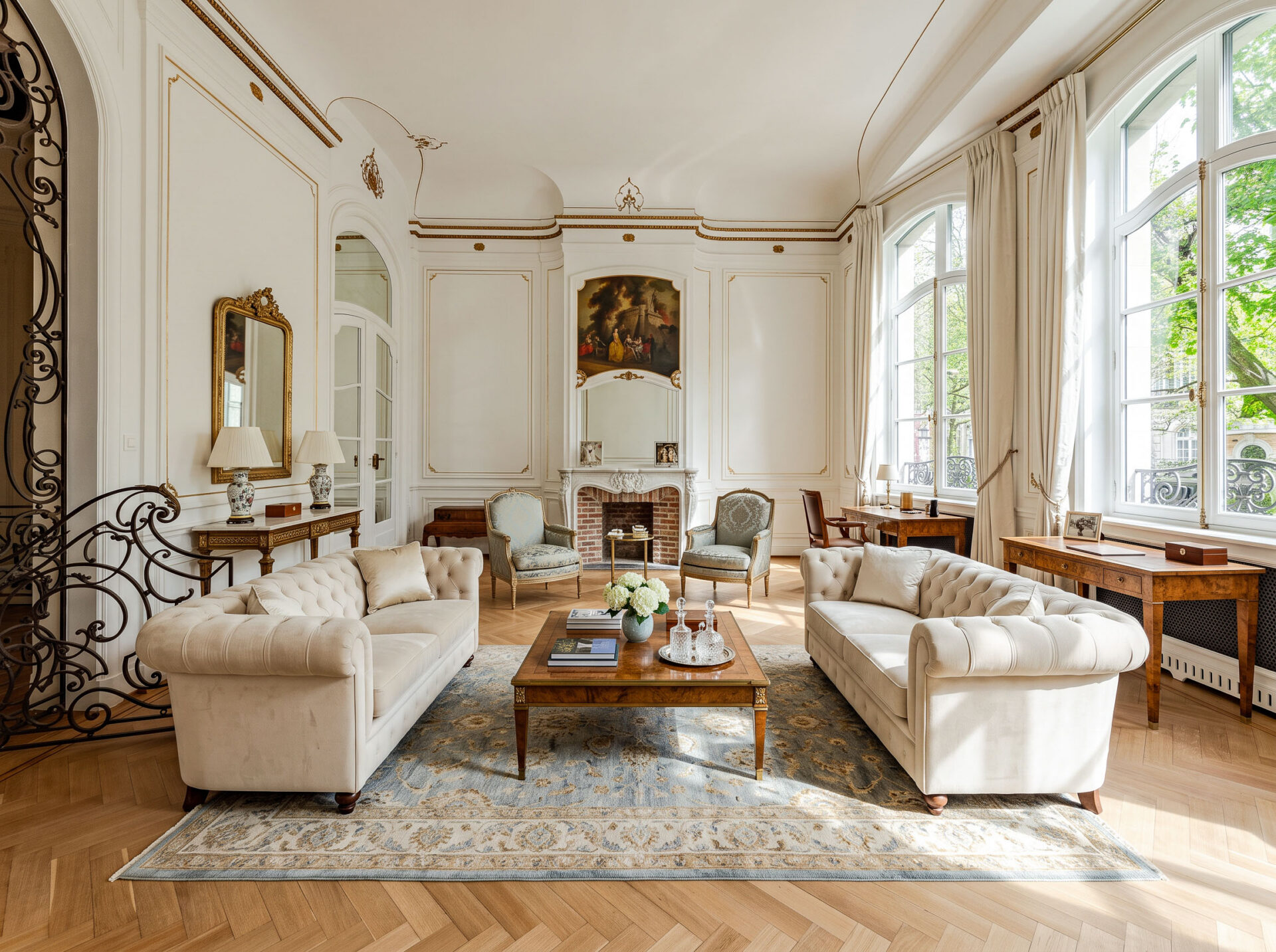
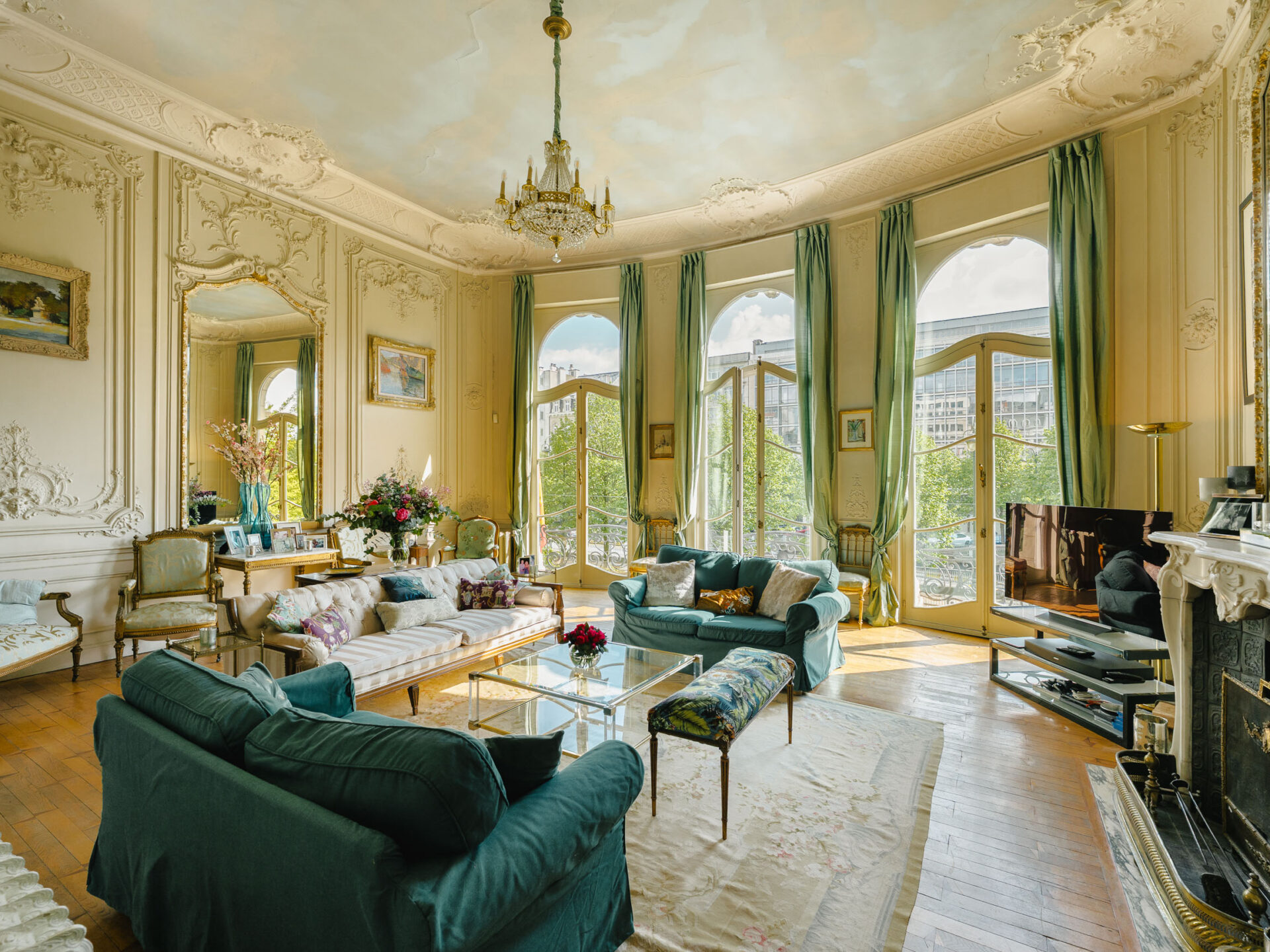
In those days, ceiling height reflected the family’s social standing. Today, such volume has become a rare luxury: light pours in through tall windows, and every climb up the stairs has something theatrical about it. These generous spaces also offer great freedom to arrange and live in the house your own way. A favourite of ours on Avenue Molière, this 1925 Beaux-Arts house designed by A. Lissen features a grand staircase that rises from the entrance hall and connects all four floors. True to the “bel étage” tradition, the reception rooms are on the first floor, with a living room with an open fireplace and a dining room with a balcony. Nearly 671 m², fully renovated, in a listed heritage building.
A haven of calm in the heart of the city
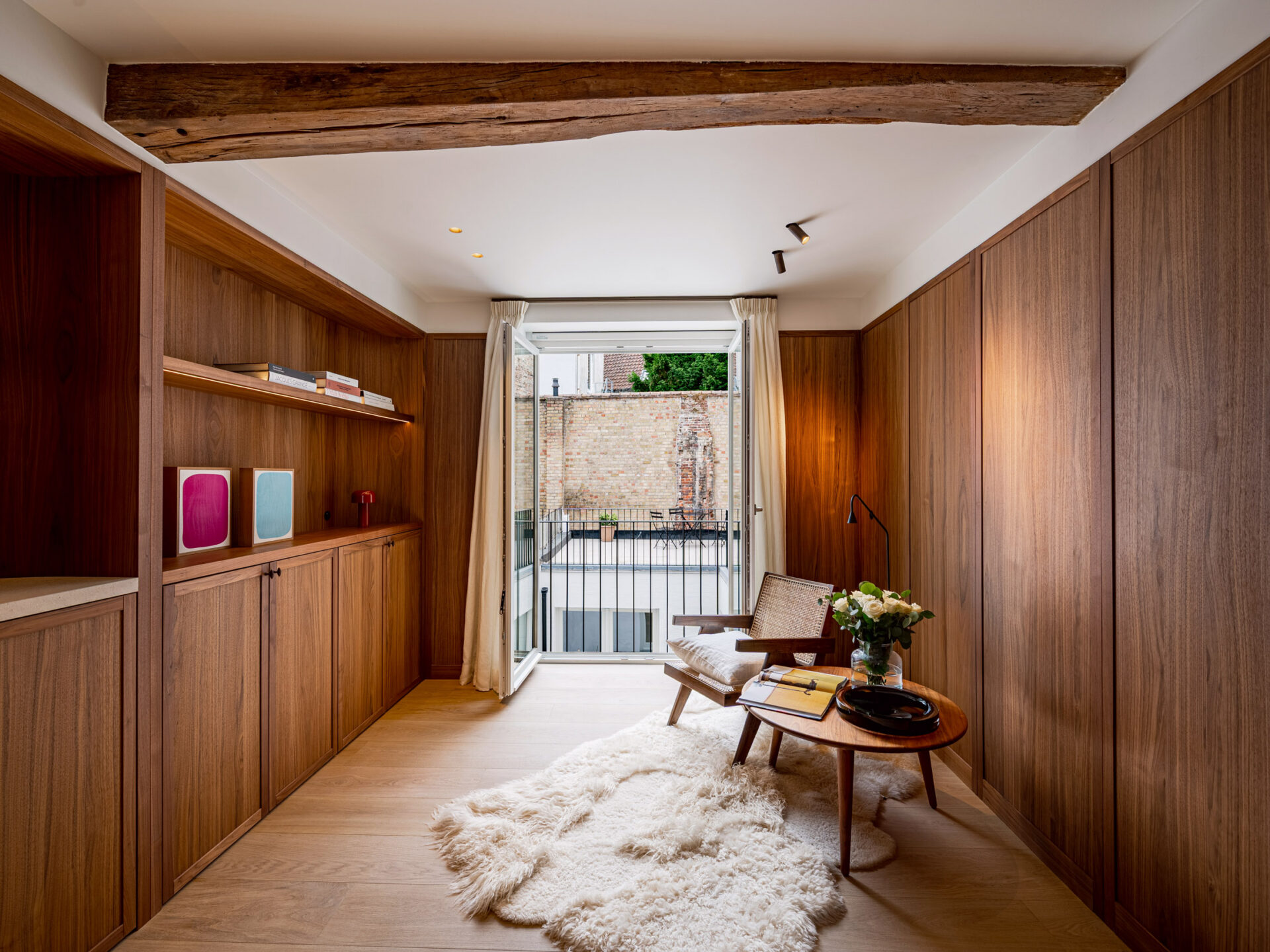
On Sint-Jansplein, just a few minutes from the Markt, you might expect the hustle and bustle of central Bruges. Yet behind the façade of this townhouse, the atmosphere changes at once. Fully renovated, the house extends over approximately 316 m² and has 4 bedrooms. The vast entrance hall, high ceilings and large windows set the tone: here, everything feels spacious. On the first floor, the living room looks out over the square, while the library leads to a south-west-facing terrace of around 45 m². At the very top, the master suite enjoys a view of the Belfry, far from the bustle below.
The charm of period details
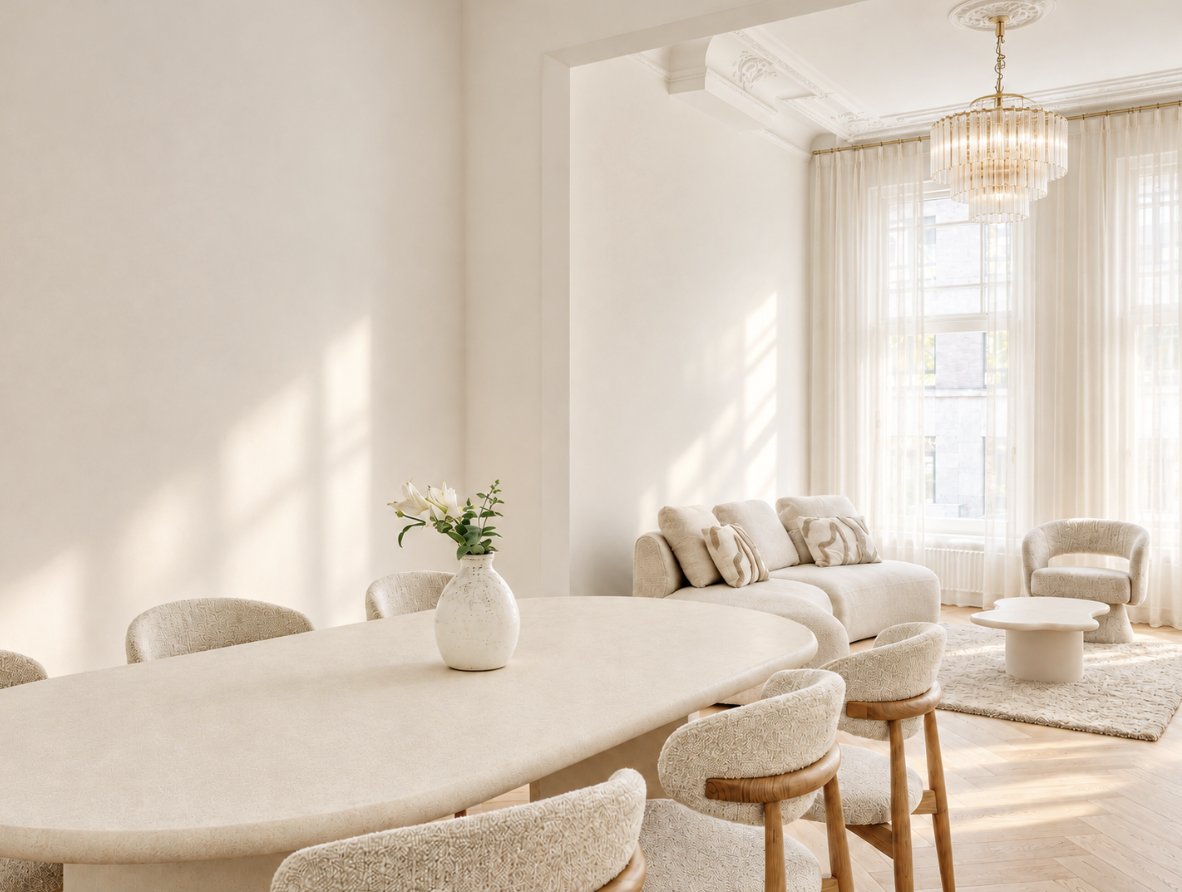
Mouldings, ornate façades, staircase banisters: these features were shaped by hand by craftsmen whose skills have all but disappeared. They bear the mark of an era, its tastes and its ambitions. It is this authenticity, impossible to recreate in a new build, that gives every townhouse its soul. Tucked away in Woluwe-Saint-Pierre, this residence makes that clear from the street with its neoclassical façade. A carriage entrance, once designed for horse-drawn carriages, leads to a majestic staircase and then to bright reception rooms with period mouldings. With a lift, 10 bedrooms across approximately 740 m² and an outbuilding converted into a flat, it can accommodate two families.
More than a house: a way of life
Today, the true luxury of a townhouse lies in its ability to adapt to your daily life. In Berchem, a stone’s throw from Koning Albertpark, this 1909 house designed by Adolphe Van Coppernolle is a fine example. Eclectic style with a neoclassical touch, 375 m² fully renovated and 4 bedrooms. A self-contained space right by the entrance can house a professional practice, the living room opens onto the terrace and private garden, and the entire second floor is dedicated to the master suite. The attic offers room for an additional bedroom and bathroom.
Outdoor spaces worthy of the house
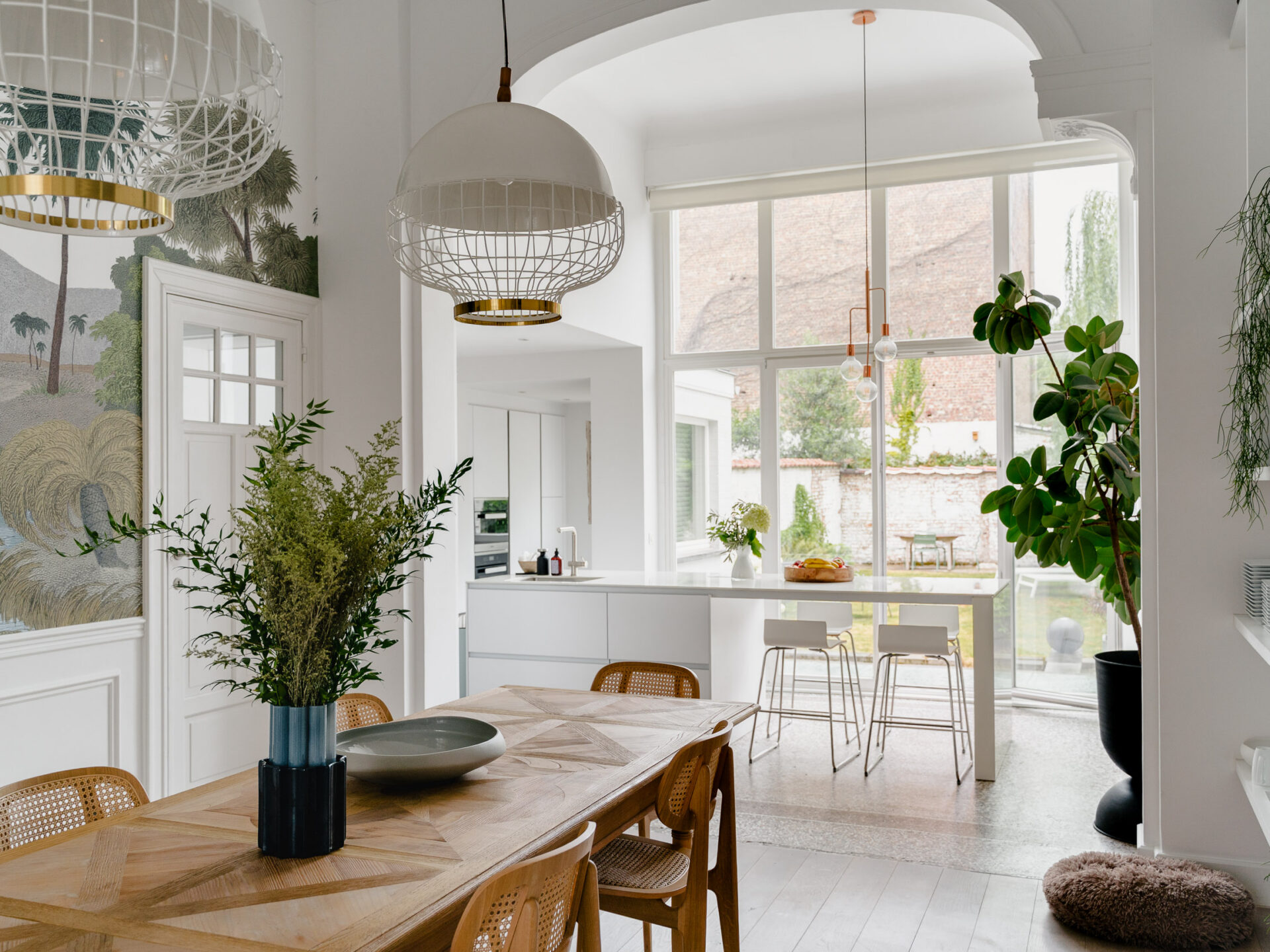
A townhouse has two faces: a façade on the street side, made to be seen, and a secluded garden at the back. This contrast is a big part of its charm, because all it takes is crossing the living room to leave the city behind. In an urban setting, a hidden patch of greenery like this is one of the most sought-after features. This house overlooks the lively Place Jean Vander Elst in Uccle, with a garden of around 225 m² at the back, sheltered from view. The living room, dining room and kitchen with island open directly onto the terrace, so the interior flows naturally outdoors. Built in 1898 and renovated in 2014, the house has kept its ceilings of more than 4 m, a fireplace, mosaic tiles and solid oak parquet flooring.
If townhouses remain so fascinating, it is because they bring together what new builds struggle to offer: impressive volumes, handcrafted period details, hidden gardens and terraces in the heart of the city, and great freedom to make the space your own. More than a century after they were built, they are far from relics of the past: they keep adapting to the way we live. All across Belgium, they prove that a way of life can stand the test of time without losing its soul.
